You open your water bill expecting the usual amount, and instead it is double or triple what you normally pay. Before you assume the utility company made a mistake, know this: a sudden spike almost always means water is escaping somewhere in your home, often in a spot you cannot see. Here are the 8 most common causes, starting with the ones we find most often, and how to track down which one is behind your bill.
1. A Running or Leaking Toilet
This is, by far, the single most common cause of a spiking water bill. A worn flapper, a fill valve that will not fully shut off, or a float set too high can let a toilet quietly run, or refill, hour after hour. A toilet that runs continuously can waste 200 gallons a day or more, which adds up fast on your bill.
- Listen for a faint hissing or refilling sound coming from the tank when no one has flushed.
- Add a few drops of food coloring to the tank, wait 15 minutes without flushing, and check the bowl. If color appears, the flapper is leaking.
- Lift the tank lid and watch the water level; if it never fully stops rising or falling, the fill valve or float needs adjustment or replacement.
2. A Hidden Slab or Wall Leak
Leaks inside walls, under floors, or beneath a concrete slab do not show up as a puddle, so they often go unnoticed for months while quietly running up your bill. Warm spots on the floor, unexplained damp patches on drywall, or the sound of running water when everything is off are all signs of a hidden leak.
A hidden leak the size of a pinhole can waste over 3,000 gallons a month. By the time it shows visible damage, it has usually been running for weeks.
3. An Aging or Cracked Water Heater
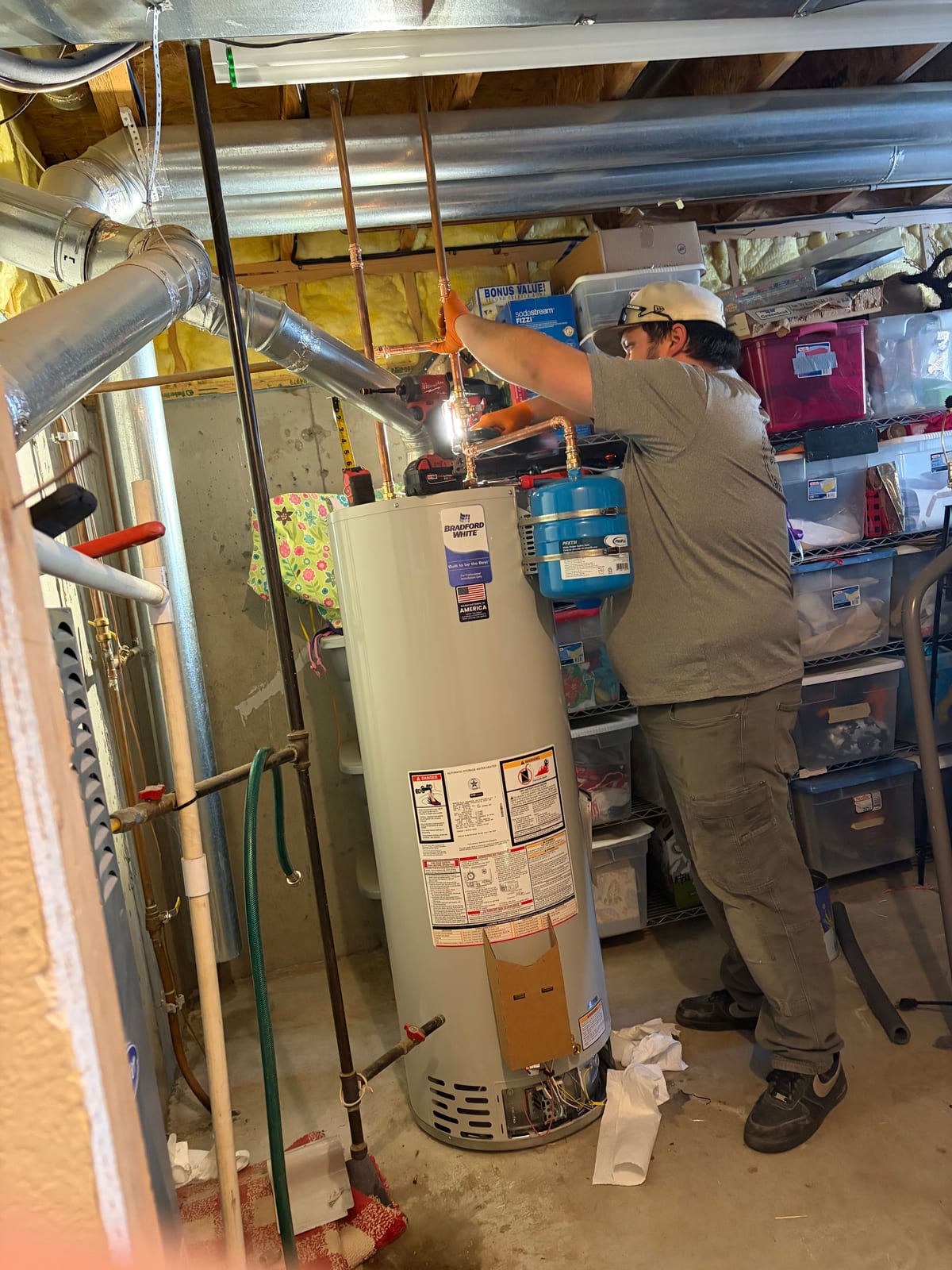
A water heater nearing the end of its life can develop small leaks around fittings, the drain valve, or the tank itself. Because it is often tucked in a closet or utility room, a slow leak here can run for a long time before anyone notices the puddle or the rusted floor beneath it.
4. A Leaking or Dripping Outdoor Faucet, Hose Bib, or Irrigation Line
Outdoor water use is easy to overlook because it happens outside the house. A dripping hose bib, a cracked irrigation line, or a sprinkler valve stuck partially open can run for days without anyone realizing, especially if the leak is underground and only shows up as a soggy patch of lawn.
- Check all outdoor faucets and hose connections for drips, especially after freezing weather.
- Walk your sprinkler zones and look for unusually soggy or greener patches of grass.
- Shut off the irrigation system for a day and see if your usage drops.
5. A Water Softener or Filtration System Stuck in Regeneration
If you have a water softener, a malfunctioning valve can get stuck in the regeneration cycle, continuously flushing water down the drain instead of completing its cycle and shutting off. This can use hundreds of gallons before anyone notices something is wrong.
6. A Dripping Faucet or Fixture You Have Learned to Ignore
A faucet that drips once every few seconds seems minor, but a single dripping faucet can waste over 3,000 gallons a year. Multiply that across a kitchen faucet, a bathroom faucet, and a shower, and the numbers add up quickly.
7. A Recent Change in Household Habits or Guests
Not every spike is a leak. Extra guests, a new pool or hot tub fill, more laundry, or a new appliance can genuinely raise usage. Before assuming a leak, think back on whether anything changed in your household in the past billing cycle.
8. A Faulty Water Meter
This is the least common cause, but it does happen. If you have ruled out every fixture and appliance in the house and your usage still looks abnormally high, it is worth asking your utility provider to test the meter for accuracy.
The Simplest Way to Confirm You Have a Leak
Before calling a plumber, run this quick test yourself. Turn off every water-using fixture and appliance in the home, including the ice maker. Write down the reading on your water meter, wait one hour without using any water, and check the meter again. If the number moved, water is leaving your home somewhere, even if you cannot see it.
- Meter did not move: your leak is likely intermittent, such as a toilet that only runs occasionally, or the spike was from usage, not a leak.
- Meter moved slightly: check toilets and faucets first, since these are the most common and easiest to confirm.
- Meter moved significantly: you likely have a larger leak, possibly underground or behind a wall, and it is time to call a professional.
The water meter test takes an hour and costs nothing. It is the single best way to know whether you are chasing a leak or just had a heavier usage month.
How We Track Down Leaks You Cannot See
When the source is not obvious, we use acoustic listening equipment and, when needed, thermal imaging to pinpoint exactly where water is escaping without tearing up your floors or walls to search for it. Once we find it, we open only the small area needed, make a lasting repair, and confirm the leak is fully stopped before we leave.
If your water bill jumped and you cannot explain why, do not wait for it to happen again. Call Mayer Plumbing at (303) 532-7597. We will help you track down the source, fix it right, and get your bill back to normal.
Need a Plumber in Berthoud?
Get fast, same-day service with upfront pricing and a workmanship warranty on every job. Call our licensed plumbers today.
Call (303) 532-7597